

♬ Do Humans and Animals Share a Sense of Beauty?
New research suggests we share an ancient musical taste with birds, frogs, and even crickets.
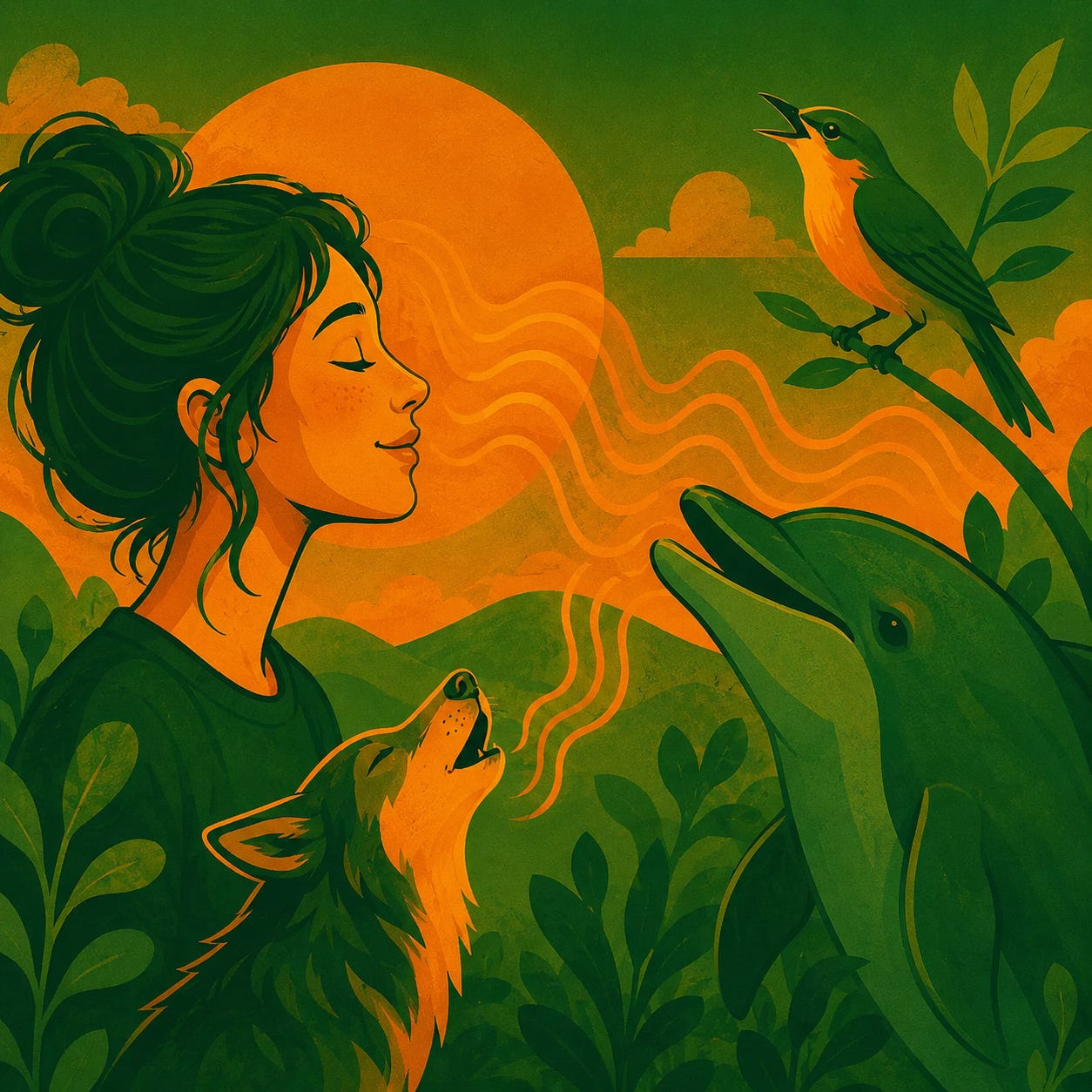
When Charles Darwin looked at the natural world, he speculated that our sense of beauty might be more than just a human cultural tradition or invention. He suspected that the same tastes that drive us to enjoy a melody might also exist in the minds of the creatures around us. We often think of our appreciation for art and sound as a unique peak of human culture, but it may actually be rooted in a biological blueprint shared with other species.
In the wild, sound is an important tool for attraction between prospective mates. Whether it’s the trill of a bird or the rhythmic pulse of a cricket, animals are constantly making aesthetic choices about which calls they find most attractive. Because our brains and sensory systems share deep evolutionary roots with other animal species, it’s possible that we find the same sounds inherently beautiful.
A new study has investigated this possibility, examining whether humans share a common auditory sense of beauty with birds, insects, amphibians, and other mammals. Over 150 years after Darwin first suggested that birds may “have nearly the same taste for the beautiful as we have”, researchers are finally putting his inkling to the test.
🧪 What did the researchers do?
In a study published in March 2026, researchers launched a project involving over 4,000 participants from across the globe. The goal was to see if human listeners would be naturally drawn toward the same sounds that animals enjoy.
The team gathered 110 pairs of audio recordings from 16 different species. For every pair, the animal preference was already established by prior biological observations. For example, male túngara frogs can produce a basic auditory call or a fancier version with extra sounds called “chucks”, which females almost always choose. Pacific field crickets also prefer traditional, ancestral chirps over newer, more modern variations of their song that evolved to evade parasites.
Human participants listened to these pairs of animal sounds and chose the one they found more pleasant, rather like a frog or cricket deciding which of the sounds around them to mate with. The researchers then analyzed whether human instincts aligned with the choices made by the animals.
🔍 What did the research find?
The results showed a striking level of agreement spanning the tree of life. Our tastes overlapped with some of the most unlikely creatures across the animal kingdom. Whether rating bird calls, frog sounds, or insect chirps, humans selected the animal-preferred sound more often than chance.
This human agreement wasn’t merely a fluke. When an animal had a very strong preference for a certain sound, humans were even more likely to agree with that choice. In other words we weren’t just guessing, but rather responding to the same acoustic pull that the animals felt. In fact, when humans selected the animal-preferred sound, they made their decision 51 milliseconds faster on average than when they disagreed. This suggests that when our choices overlap with other animals, they align in a way that feels like a natural gut reaction.
The study also identified a few specific ingredients of beauty. Both humans and animals showed a clear bias toward sounds with interesting adornments or flair—extra trills, complex textures, and lower pitches. There was also a shared fondness for more ancestral sounds, suggesting that some preferences might be baked into our biology over millions of years.
The study found that you don’t need to be a scientist or experienced musician to find the beauty in an animal call, but people who listened to music more frequently were slightly better at aligning with animal preferences. This suggests that a life filled with music might make us more sensitive to the universal rules of sound that govern the natural world.
⭐️ Takeaway tips
#1. Listen out for nature’s beauty
Next time you’re out in nature, notice animal calls not just as noise but as a form of biological music. The qualities you find pleasing—the rhythm of a cicada or the complexity of a songbird—may be the same features that the animals themselves find attractive. It’s a reminder that we are more deeply connected to the wild, natural world than we realize.
#2. Reconsider why you like the sounds you do
The evolutionary origins of music and the reasons for why particular types of music feel so good are still mysterious. This research suggests we are naturally drawn to complexity, low pitch, and adornment in sound. When you’re blown away by a piece of music—whether it’s the pounding bass, melodic overtones, or catchy choruses—you may be tapping into an evolutionary preference buried deep in your genetics. Many of our musical tastes may not be purely modern preferences but rather ancient biological triggers rooted in attraction and social behavior.
#3. Enjoy a new dimension in your musical appreciation
The fact that frequent music listeners were more in sync with animal tastes suggests that our ears can be trained to recognize natural beauty more easily. If you enjoy diversity in your musical selections, you may be cultivating an active ear that helps you tap into the deep, shared heritage of the living world.
“Music expresses that which cannot be said and on which it is impossible to be silent.”
~ Victor Hugo